Poland air focus: Drones, transport aircraft and tankers dominate potential procurement plans
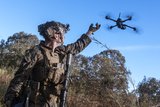
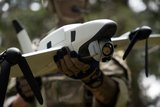
Poland signed for 13 additional FlyEye aircraft from WB Group in October. (Photo: WB Group)
With a rising defence budget and equipment list, Poland’s air market is set to grow as the country continues to modernise its transport and helicopter fleets while seeking out uncrewed aerial vehicles and loitering munitions.


Poland’s defence budget continues to climb, with the country aiming to spend around 4.7% of its GDP on defence in 2026 – around US$55 billion – according to statements from the Polish government.
Largely spurred on by Russia’s invasion of Ukraine and the threat to its own borders, Poland’s procurement plans are ambitious, with an expanding equipment wishlist that would see it acquire more air platforms including drones and tanker and transport aircraft. According to research from Shephard Defence Insight, Poland has at present around $5.6 billion in uncontracted air programmes.
In late November, the country’s Prime Minister Donald Tusk announced that Poland was set to receive the largest amount of funds from the EU’s SAFE fund – a sum of €43.7 billion ($51 billion) – to enhance its defence capabilities.
Related Articles
Poland confirms US$3.8 billion F-16V upgrade
Boeing to build Apache AH-64E attack helicopters for Poland, Egypt and Kuwait
Some of these loaned funds, according to Tusk, would be allocated to procure drones for the EU’s Eastern Shield or Baltic Drone Wall. Poland has also recently committed to introduce a tax on banks to help pay for its increase in defence spending.
Speaking at defence thinktank Centre for Strategic and International Studies’ (CSIS) event on 5 December, Polish undersecretary for state assets, Konrad Golota, emphasised that Poland’s focus remained fixed on expanding and upgrading the capabilities of its armed forces.
“We are modernising our army. We’re…focusing on the protection of external borders, focusing on securing the Baltic Sea Region,” he said.
In the last month alone, the US announced a possible Foreign Military Sale to Poland on its order with Boeing for 96 AH-64E attack helicopters. In August, it approved a $3.8 billion upgrade for 48 of the Polish Air Force’s existing F-16 Block 50/52 platforms to the latest F-16V variant – work that will be overseen by its state-run Polish Armaments Group (PGZ).
Poland’s 10-year spending plan
Over the next decade, Shephard Defence Insight forecasts that Poland will spend around $4.26 billion on currently uncontracted crewed and uncrewed air platforms. Most of its uncontracted expenditure, unsurprisingly, is likely to go on uncrewed aerial vehicles (UAVs), at a forecast cost of $3.1 billion, as the country ramps up its stockpile of uncrewed platforms.
As the chart above shows, crewed helicopter programmes have a forecast expenditure of $697.4 million, while $510 million remains available in uncontracted crewed fixed-wing procurement programmes over the next 10 years.
Recent statements from the country’s defence minister show that tanker and transport aircraft are a priority for the country – which Poland could use SAFE funds to procure. One of the largest yet-to-be-awarded crewed air programmes is Poland’s transport aircraft requirement. The country is still seeking a transport aircraft to replace its ageing C-130 Hercules, and has $601.4 million available to acquire this capability, $510 million of which is to be spent over the next 10 years.
Shephard Defence Insight estimates that a possible acquisition could involve five aircraft with a potential contract award date of 2028. Embraer is one company bidding for this requirement, with executives recently signing a cooperation deal for aerospace with five companies owned by PGZ.
Warsaw is also potentially planning to procure A330 MRTT aircraft to support its expanding fighter jet fleet – with reported plans in December 2025 that it could procure three to four Airbus A330 MRTT aircraft at $1 billion using SAFE funds.
Changing helicopter acquisition plans
Aside from fixed-wing upgrades and additions, the country is currently reassessing its helicopter requirements, with decisions affected by rapid technology development and the Ukrainian conflict.
In June 2025, Poland cancelled its planned purchase of 32 S-70i Black Hawk helicopters, citing a need to reassess its military equipment and strategic requirements. The order was intended to complement the acquisition of its 96 AH-64E helicopters, which it firmed in November 2025, but Poland is now likely to consider other equipment to take its place, which includes drones.
Poland’s main helicopter priorities remain focused on training helicopters, a naval helicopter requirement and heavy transport helicopter, according to prior statements from Maj Gen Cezary Wisniewski, deputy general commander of the Polish Armed Forces.
Up to 24 training helicopters are currently sought by Warsaw. Babcock, Airbus and CAE signed a memorandum of understanding in May 2025 to provide the Polish Air Force with training, offering the H145M for selection. Leonardo has also offered its AW109 Trekker to fulfil this requirement.
For its naval anti-submarine warfare (ASW) requirements, Poland has already started to replace its Mi-14 ASW helicopters and SH-2G Super Seasprites with its acquisition of AW101 platforms.
Shephard Defence Insight estimates that between four and eight helicopters could be acquired to aid this requirement further, via its Project Kondor naval procurement. The programme cost is estimated to be between $88 million and $176 million, depending on the number of helicopter units procured.
Ongoing commitment to loyal wingman
Warsaw and the Polish Air Force have reiterated their commitment to developing and fielding a loyal wingman to operate with and alongside its fighter aircraft. Shephard Defence Insight has estimated that the Ministry of National Defence (MON) could award a $1.4 billion contract for 96 loyal wingman units between 2027 and 2028, with $1.2 billion of that to be spent over the next 10 years.
Polish officials also stated the country was watching the US Air Force’s (USAF) efforts with collaborative combat aircraft (CCA) before making any procurement decisions – prioritising its F-35 rollout instead. Testing for Increment 1 of the USAF’s CCA programme is ongoing with GA-ASI and Anduril’s UAVs, with a procurement decision anticipated for early 2026.
Another acquisition programme that remains open is Poland’s Gryf effort to procure indigenous UAVs for the Polish Army, intended for strike and reconnaissance missions.
Despite starting in 2016, the programme stalled and, in 2021, officials admitted that the country’s purchase of the Baykar Bayraktar TB2 was due to the development of indigenously produced comparable drones still being several years away.
More recently, a spokesperson for the MON has reaffirmed the country’s commitment to the Gryf effort, leading Shephard Defence Insight to conclude that the $268.1 million procurement remains open, with $187.7 million forecast to be spent before 2035.
The Bayraktar TB2 purchase demonstrates that Poland acknowledges its limitations in drone production and is not averse to importing foreign solutions. This can also be seen in the Zefir programme, through which GA-ASI’s MQ-9B was purchased for $310 million in mid-2025. The MON has stated that a further order for MQ-9B’s could go ahead. If so, Shephard Defence Insight forecasts that a second order for nine UAVs could be for an estimated $930 million.
Poland has been more successful in developing and subsequently acquiring smaller category UAVs and loitering munitions. In line with its January 2025 plans to create a drone force, it signed a May 2023 framework agreement with WB Group for the eventual purchase of 1,600 mini-UAV aircraft.
To date, three contracts – a total of 120 aircraft, which included FlyEye aircraft – have been signed through this framework agreement, with 96 other FlyEyes being signed through the country’s separate Force Protection Drone Systems programme. Of the remaining 1,384 aircraft, Shephard Defence Insight estimates that Poland could acquire these in the next decade with that number of FlyEye units costing up to $684.90 million, and $455.4 million spent before 2035.
On loitering munitions, Poland has followed a similar approach, signing another framework agreement to acquire 10,000 Warmate loitering munitions, with the first procurement contracts to be signed cyclically to allow Poland to purchase the most up-to-date UAVs.
US procurement and joint venture expansion
While SAFE funds are aimed at allowing recipient countries to buy European equipment, Poland has been vocal about wanting to include US manufacturers in its additional procurement of defence equipment.
According to Konrad Golota, the country hopes that these EU-allocated SAFE funds will allow Poland to finance an increasing number of joint ventures between the two – facilitating, among other things, technology transfer, which the country is increasingly interested in between Poland and international industry.
“I believe we can transfer this interoperability…into defence industries,” he said, referencing the US, building on lessons learned from Ukraine. “We are rebuilding the system of our defence industry, and now is the perfect moment for alignment with the American defence industry,” Golota added.
Referencing discussions between US Secretary of Defense Pete Hegseth and Poland’s Deputy Prime Minister and Minister of National Defence Władysław Kosiniak-Kamysz, he said: “They [US and Polish defence leaders] clearly underlined the need and will of joint ventures between Polish and American defence industry.”
US companies such as Anduril have already committed, with the company signing with the PGZ to work on a Polish variant of the Barracuda-500M missile in October. PGZ CEO Adam Leszkiewicz said at the time this partnership could pave the way for future technology transfer.
Related Programmes in Defence Insight
Warmate (Framework Agreement) [Poland]
Harpii Szpon (Loyal Wingman) [Poland]
Related Equipment in Defence Insight



More from Country-focused updates
-
![February Drone Digest: US manufacturers face the Gauntlet and find success abroad]()
February Drone Digest: US manufacturers face the Gauntlet and find success abroad
The US launched the Gauntlet test in February as part of its accelerated attack drone procurement effort while also exploring various naval capabilities that could lead to procurements down the line. Shield AI’s V-Bat, meanwhile, has been stirring up global interest.
-
![Saudi Arabia air focus: The world’s fourth-largest UAV market seeks to strengthen domestic industry]()
Saudi Arabia air focus: The world’s fourth-largest UAV market seeks to strengthen domestic industry
With $9.18 billion in uncontracted programmes — including a potential multi-billion-dollar MQ-9B deal — Saudi Arabia’s UAV sector is poised for significant further growth and industrial expansion.
-
![Spain air focus: Demand builds with $19.7 billion up for grabs in unawarded contracts]()
Spain air focus: Demand builds with $19.7 billion up for grabs in unawarded contracts
Despite Spain’s modest GDP spend on defence, the country still has a range of fixed-wing and UAV programme requirements as yet unawarded, with a potential US$3.10 billion set to be spent over the next decade.
-
![January Drone Digest: MALE, rotary-wing and loitering munition UAVs dominate early 2026]()
January Drone Digest: MALE, rotary-wing and loitering munition UAVs dominate early 2026
The first month of 2026 has seen activity in the MALE, rotary-wing, and loitering munition UAV markets, with significant investments and commitments from Germany, Turkey, the UAE and the US. At the same time, questions over loitering munition performance in Ukraine highlight the growing scrutiny alongside rising demand.
-
![December Drone Digest: Germany, Australia and US champion indigenous UAV production]()
December Drone Digest: Germany, Australia and US champion indigenous UAV production
One of the key trends seen in December has been the rise in indigenous investment within the UAV market, particularly across certain countries, with Germany, Australia and the US focusing on their commitments to sovereign development.
-
![November Drone Digest: GA-ASI eyes Middle East for Gambit, Edge Group unveils new UAVs]()
November Drone Digest: GA-ASI eyes Middle East for Gambit, Edge Group unveils new UAVs
In November 2025, GA-ASI unveiled a new Gambit variant, the Gambit 6, and appears to be pitching the aircraft series to various customers in the Middle East, which is a fast-emerging CCA market. The Dubai Airshow also saw the unveiling of various Emirati aircraft from Edge Group.