


Armed forces race to keep counter-UAS defences up to date
Procurement of counter-uncrewed aerial systems is accelerating as the rapidly evolving capabilities of autonomous drones pushes developers to combine sensors and improve alerts for soldiers.


The contribution in Rzeszów, Poland, by Norway will see it assume responsibility for the airport for the transportation of civilian and military materials to Ukraine. (Photo: Ole Andreas Vekve/Forsvaret)
Norway has announced that it will take up air defence responsibilities in Poland, safeguarding the airspace above the airport in Rzeszów, Poland. It will send around 100 troops, NASAMS air defence systems and F-35A fighter jets its Ministry of Defence said on 2 December.
The country will take up this responsibility in early December 2024 until Easter, when various other NATO nations will swap out to provide Poland with protection.
“Norway contributes to ensuring that aid to Ukraine reaches its destination, allowing Ukraine to continue its fight for freedom,” said Norway Minister of Defence Bjørn Arild Gram.
“Russia’s invasion of Ukraine has demonstrated the value of air defence, and the Norwegian contribution in Poland is highly appreciated,” he added. “We are doing this primarily for Ukraine and Poland, but it also shows that we stand by our commitments within NATO.”
In June 2024, Norway gained approval for a US$1.9 billion purchase of AIM-120C-8 AMRAAMs, for use with NASAMs as well as possibly with its fleet of F-35As. According to Shephard Defence Insight, Norway purchased 52 F-35As through a Foreign Military Sale (FMS) in 2008 for $11.2 billion – initially for 40 with the addition of a further 12 options.

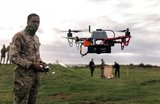
Procurement of counter-uncrewed aerial systems is accelerating as the rapidly evolving capabilities of autonomous drones pushes developers to combine sensors and improve alerts for soldiers.
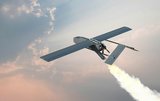
Ukraine’s growing investment in deep-strike capabilities underscores the importance of mass drone production, with US and European suppliers increasingly turning to civilian manufacturing expertise to scale their operations.
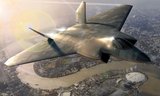
November’s crewed air market demonstrated the ways allies are working together to modernise their air forces, showing how future partnerships could take different forms depending on what countries need most.
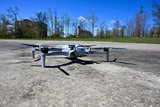
Swarm Defense built bomber UAV prototypes in under three weeks for the Pentagon’s Drone Dominance Program in an indication of how quickly manufacturers of uncrewed aircraft have to compete for contracts.
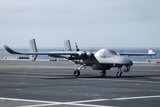
Tekever’s AR5 carrier debut highlights its potential for maritime surveillance as the Royal Navy develops its future hybrid air wing.

How can armed forces connect autonomous platforms and introduce new capabilities faster while maintaining security and airworthiness?

Connect with us on socials


