Modified 757 aircraft planned to inform GCAP sensors and communications takes flight
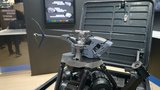
Excalibur will be equipped with Leonardo’s next-generation sensor technology demonstrators. (Photo: Leonardo)
The Boeing 757, dubbed Excalibur, was equipped with new side and belly pods and assessed for stability during flight. The aircraft will now undergo further engineering work at QinetiQ’s Boscombe Down facility in Wiltshire, England.


Leonardo’s Excalibur Boeing 757 technology demonstrator aircraft has successfully completed the first phase of modification and flight testing in an evaluation of new side and belly pods. The programme is a joint effort between the Italian company, 2Excel and the UK Ministry of Defence.
Excalibur is being overhauled into a flying laboratory for combat air technology as part of the UK’s Future Combat Air System (FCAS), which will include the core fighter being developed under the Global Combat Air Programme (GCAP). It will also evaluate a broader range of capabilities such as uncrewed aircraft, information systems and weapon systems.
The pods added to the aircraft will host the Integrated Sensors, Non-Kinetic Effects (ISANKE) and Integrated Communications Systems (ICS) that Leonardo UK and its international partners are developing as part of their work on GCAP.
Related Articles
How FCAS and GCAP fighter jet programmes could converge at subsystem level
GCAP alliance signs treaty for sixth-generation fighter and establishes UK as programme HQ
UK GCAP fighter effort can only survive if more funds are allocated, expert warns
Further modification to the Excalibur aircraft will include a fighter jet-style nose cone, to host advanced radar-based sensor demonstrators.
Excalibur is expected to fly with advanced new ISANKE & ICS technology on-board over the next few years to de-risk and accelerate the domain’s development programme and in turn support the ambitious timescales of GCAP.
Related Programmes in Defence Insight

More from Air Warfare
-
![Eurosatory 2026: First public flight of Teledyne FLIR Black Recon reconnaissance system]()
Eurosatory 2026: First public flight of Teledyne FLIR Black Recon reconnaissance system
The drone took flight as undisclosed European customers are testing the system. Defence Insight highlights the Nordic region and existing Black Hornet users as potential early customers amid growing demand for micro-UAVs.
-
![Eurosatory 2026: The H160M’s agnostic approach to drones draws global interest]()
Eurosatory 2026: The H160M’s agnostic approach to drones draws global interest
As Airbus Helicopters advances its H160M Guépard programme towards targeted first delivery in late 2028 for the French Army, the platform’s “agnostic” approach to drone integration could offer a window into how Western militaries are rethinking the relationship between crewed rotorcraft and uncrewed systems.
-
![Why is the US Air Force refuelling tanker fleet under scrutiny?]()
Why is the US Air Force refuelling tanker fleet under scrutiny?
In a recent report, the GAO warns that delays, availability issues and operational pressure could create gaps in the USAF refuelling inventory while the branch transitions to the KC-46 Pegasus.