Loyal wingman programmes gather pace as US and European procurement plans take shape
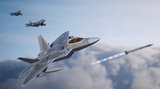
YFQ-44A Fury aircraft, right, flies alongside an F-35 Lightning II. (Photo: US Air Force)
Northrop Grumman, Airbus and Anduril are positioning their uncrewed aerial vehicles for future collaborative combat aircraft contracts in a market that is forecast to exceed $36 billion.


As the US advances towards the next phase of its Collaborative Combat Aircraft (CCA) programme, European countries are exploring their own requirements for autonomous combat aircraft, with cost, operational flexibility and technological sovereignty emerging as key considerations.
The global CCA market is projected to grow by 30% over the next decade, according to Shephard‘s Collaborative Combat Aircraft Special Report, with more than US$36 billion expected to be invested in programmes by 2035. The aim of these programmes is to field relatively low-cost aircraft capable of operating with varying levels of autonomy alongside crewed fighters.
While the US Air
Our news & analysis is now part of Defence Insight®
A Basic-level or higher Defence Insight subscription is now required to view this content.

More from Air Warfare
-
![The new generation of defence companies emerging from the US UAV boom]()
The new generation of defence companies emerging from the US UAV boom
As the Pentagon accelerates procurement of low-cost, lethal UAVs through its Drone Dominance Program, emerging suppliers will need to demonstrate manufacturing capacity, supply chain resilience and reliability.
-
![US Coast Guard faces key procurement decisions after C-130J and MQ-9B orders]()
US Coast Guard faces key procurement decisions after C-130J and MQ-9B orders
The service is updating several parts of its aviation fleet including fixed-wing and rotary-wing aircraft and procuring uncrewed aircraft to boost its maritime surveillance.
-
![Sophistication versus simplification: the divided future of air-to-air missiles]()
Sophistication versus simplification: the divided future of air-to-air missiles
As global air combat operations continue to evolve at a rate not seen for decades, what will the next generation of air-to-air weapons look like, and what missions will they need to fulfil?