Long-range drone acquisition axed as Norway announces $11.75 billion spending uplift
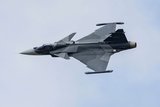
Norway and the UK are collaborating for the former to build up expertise in long-range drones; the UK operates GA-ASI’s MQ-9B Protector. (Photo: GA-ASI)
Norway’s funding boost will help the country reach 3.5% of GDP on defence spending by 2035, with autonomous systems part of the long list of priorities alongside frigate acquisition and development of a new Finnmark Brigade.


Norway has published plans to boost its defence spending by up to almost US$12 billion, outlining several priorities to improve its defence capabilities while also announcing programme cuts and delays.
On 27 March, Norway said that it would allocate a further NOK115 billion ($11.75 billion) to its Long-term Defence Plan over the next 10 years, bringing the country’s defence spend up to 3.5% of GDP. The new proposition extends its planning period out to 2040.
First presented in 2024, the original $163 billion plan covers the strategic direction of objectives for the country’s defence spending over 12 years. This additional funding
Our news & analysis is now part of Defence Insight®
A Basic-level or higher Defence Insight subscription is now required to view this content.

More from Air Warfare
-
![Ukraine fighter jet plans accelerate with Sweden and Belgian updates]()
Ukraine fighter jet plans accelerate with Sweden and Belgian updates
The country could be on the cusp of finalising an historic deal with Saab for up to 150 aircraft, with Belgium also increasing its number of donated F-16 aircraft to 53 with refreshed delivery timelines.
-
![US Air Force prepares next stage of E-3 Sentry modernisation]()
US Air Force prepares next stage of E-3 Sentry modernisation
The USAF intends to conduct the second phase of the DRAGON programme from FY2026 to FY2030, while the future of the E3 replacement remains unknown.
-
![Why Embraer’s C-390 Millennium trajectory continues to climb (updated 2026)]()
Why Embraer’s C-390 Millennium trajectory continues to climb (updated 2026)
The medium airlift aircraft is swiftly becoming the top pick for an array of countries wishing to enhance their tactical transport capabilities.