Israel to equip F-16I fleet with Elbit self-protection upgrade
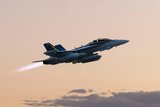
The Israeli Air Force operate nearly 100 F-16I jets. (Photo: IDF)
The $80-million contract for the development and installation of the Advanced Self-Protection Suite on the F-16I further boosts Israeli Air Forces’ (IAF’s) fleet survivability.


The Israel Ministry of Defense (IMoD) has awarded Elbit Systems a US$80-million contract for the development and installation of an advanced airborne self-protection suite on its F-16I Sufa fleet.
According to Elbit, the suite will include an electronic warfare (EW) solution, integrated with an advanced electro-optical passive missile warning and launch detection system as well as a chaff and flare dispensing system for protection against guided missiles.
These systems will enable “enhanced protection” from a variety of threats, the technology company added.
The deal is seen by the IMoD as helping to provide “production independence in Israeli defence industries and reduce dependency on external factors.
“This is to ensure the IDF’s qualitative military edge and support its current and future operational needs under all conditions.”
This award is one such recent contract Elbit has made with air forces in the last year to boost fleet survivability against electronic warfare threats. In 2024, it was awarded with US$175 million worth of contracts to supply an EW and directed infrared countermeasure self-protection suite to a NATO European country.
Israel operates 97 F-16I Sufa jets in its fleet, out of an ordered 102, which Lockheed Martin produced specifically for the country according to IAF requirements.
Related Equipment in Defence Insight


More from Air Warfare
-
![Pentagon’s 800% PAC-3 MSE surge faces production bottleneck as Patriot demand soars]()
Pentagon’s 800% PAC-3 MSE surge faces production bottleneck as Patriot demand soars
The Pentagon wants to procure 3,203 PAC-3 MSE interceptors in FY2027, but production constraints and international demand could impact efforts to rebuild depleted missile stocks.
-
![AIM-260 JATM deal puts Australia’s missile-industrial ambitions in focus]()
AIM-260 JATM deal puts Australia’s missile-industrial ambitions in focus
While a potentially accelerated acquisition timeline could strengthen the RAAF’s long-range air combat capability, Canberra’s continued reliance on US missile production is also put under the spotlight in parallel to its push to build a sovereign industry.
-
![Attack drones versus CUAS – the future of warfare or just another trend?]()
Attack drones versus CUAS – the future of warfare or just another trend?
Demand signals for counter-drone technology are strong and the market is becoming crowded, but is this really the beginning of a new phase of warfare or will commentators be talking about something else 10 years from now?