Israel cleared for $20 billion in arms packages
F-15IA is based on the F-15EX, seen here in trials three years ago. (Photo: Boeing)
Israel’s requests reflect the high demands of its military and on its local production capability as it continues with its operations in Gaza and against others in the region.


The US Secretary of State has approved the sale to Israel of 50 F-15IA multi-role fighter aircraft, mid-life update kits for the country’s existing F-15Is, almost 33,000 120mm tank cartridges, M114 vehicles and 30 AIM-120C-8 Advanced Medium Range Air-to-Air Missiles (AMRAAM).
These sales were notified by the Defense Security Cooperation Agency to US Congress as four potential Foreign Military Sales to Israel on 13 August along with a request for M933A1 120mm High Explosive Mortar Cartridges.
The approval of F-15IA, based on the F-15EX, along with upgrade kits for F-15I aircraft to take them to same standard, had
Our news & analysis is now part of Defence Insight®
A Basic-level or higher Defence Insight subscription is now required to view this content.

More from Air Warfare
-
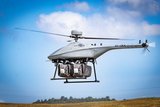
![Spain air focus: Mature UAV market rewards early supplier engagement]()
Spain air focus: Mature UAV market rewards early supplier engagement
Spain accounts for 5% of European military UAV spending, broadly in line with its share of the continent’s wider defence market. What sets the country apart, however, is how much of that spending has already been committed, reflecting Spain's earlier adoption of the capability.
-
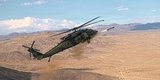
![New US Army UH-60M Black Hawk order bridges uncertain path to MV-75 transition]()
New US Army UH-60M Black Hawk order bridges uncertain path to MV-75 transition
The US$234 million award for 16 Sikorsky UH-60Ms preserves near-term production, but funding uncertainty and an undefinitised contract leave the US Army’s long-term Black Hawk requirements unresolved.
-
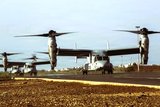
![V-22 Osprey safety upgrade moves towards wider fleet installation under $35.5 million deal]()
V-22 Osprey safety upgrade moves towards wider fleet installation under $35.5 million deal
Bell Boeing will supply 73 additional ODSSHI kits as NAVAIR prepares to introduce predictive drive-system monitoring across US and Japanese V-22 fleets.
-
![AFA 2026: US Air Force examines uncrewed cargo aircraft for contested logistics]()
AFA 2026: US Air Force examines uncrewed cargo aircraft for contested logistics
The US Air Force is evaluating demonstrators for uncrewed cargo missions as it considers logistics requirements across the Pacific and other contested environments.