How Chinese advancements will impact the future development of the US Air Force fleet
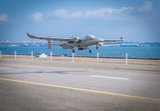
The B-21 Raider. (Photo: US Air Force)
US Air Force Secretary Frank Kendall has said that China would continue to be a “problem” for the development of the service’s fleet over the coming decades.


Recent Chinese advancements in the air domain have been placing the US Air Force (USAF) in an uncomfortable position and the service will have to change its approach to developing, procuring and modernising aircraft, according to the head of the branch.
“China remains a problem [in the coming decades],” said USAF Secretary Frank Kendall. “Russia doesn’t go away as a serious threat, but China increasingly dominates the story [and] is a strategic competitor to the US.”
Speaking in a webinar conducted on 13 January led by the US-based think tank CSIS, Kendall pointed out that both the US Space Force and USAF
Our news & analysis is now part of Defence Insight®
A Basic-level or higher Defence Insight subscription is now required to view this content.

More from Air Warfare
-
![Maximise survivability with advanced electronic warfare (video)]()
Maximise survivability with advanced electronic warfare (video)
BAE Systems’ all-digital EW delivers 360-degree threat awareness in contested environments, boosts survivability, and cuts lifecycle costs.
-
![British Army’s Project Corvus selection highlights new era of drone sovereignty]()
British Army’s Project Corvus selection highlights new era of drone sovereignty
The UK’s choice of the Tekever AR5 for Project Corvus reflects a wider shift in military drone procurement towards solutions that centre on sovereignty and domestic production, moving away from overseas reliance.
-
![FIA 2026: KAI to offer T-50 jet trainer to UK Royal Air Force]()
FIA 2026: KAI to offer T-50 jet trainer to UK Royal Air Force
Another contender for the Royal Air Force's future Hawk trainer replacement programme has emerged, with Korea Aerospace Industries (KAI) putting forward its T-50 as a proven solution that could be manufactured in the UK.
-
![FIA 2026: Honeywell Aerospace targets expansion following June spin-off]()
FIA 2026: Honeywell Aerospace targets expansion following June spin-off
Honeywell Aerospace charted its growth strategy as a standalone company, with CEO Jim Currier pointing to record defence budgets and a $19 billion backlog as drivers of expansion.