Focus on economy over capability highlights the cost imperative for CCA success
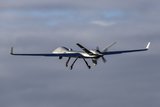
The XQ-58 Valkyrie is a CCA that has been flying since 2019. Shephard believes it is one of the cheapest MALE CCAs. (Photo: Kratos)
Striking the right balance between cost and capability is likely to become more crucial in the increasingly competitive collaborative combat aircraft market. Shephard’s special CCA market report examines where the opportunities lie for suppliers.


The growing push to acquire collaborative combat aircraft (CCA) is fundamentally rooted in cost-effective calculations, according to Shephard Defence Insight’s Special Report: Collaborative Combat Aircraft (CCA).
The US Air Force’s (USAF) Increment 1 CCA effort is based on the concept that mass is necessary to compete effectively against an adversary in symmetrical warfare. Due to budgetary constraints, though, this mass must be economical to obtain and operate.
That is why USAF secretary Frank Kendall stated that CCA drones should cost around US$25 million per airframe. Likewise, the 13 MQ-28A Ghost Bats Australia acquired between 2013 and 2022 from Boeing Defense Australia had an
Already have an account? Log in
Want to keep reading this article?



More from Air Warfare
-
![Franco-German alliance aims to resolve FCAS woes by end of April as dispute rolls on]()
Franco-German alliance aims to resolve FCAS woes by end of April as dispute rolls on
The disagreement between French-German industry continues as both governments work to keep the programme alive and on track to develop and deliver a sixth-generation fighter jet.
-
![Long-range drone acquisition axed as Norway announces $11.75 billion spending uplift]()
Long-range drone acquisition axed as Norway announces $11.75 billion spending uplift
Norway’s funding boost will help the country reach 3.5% of GDP on defence spending by 2035, with autonomous systems part of the long list of priorities alongside frigate acquisition and development of a new Finnmark Brigade.
-
![Dormant helicopter programmes in Africa and Asia present opportunities]()
Dormant helicopter programmes in Africa and Asia present opportunities
Growing capability gaps caused by ageing Soviet-era platforms in Africa and Asia are creating opportunities, as disrupted supply chains and sanctions open the door for Western manufacturers to expand into these markets.