First confirmed US one‑way drone strike on Iran sharpens Pentagon UAV expansion
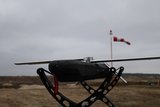
A test launch of a low-cost one-way attack drone from the USS Santa Barbara in the Arabian Gulf in December 2025. (Photo: US Army)
The US is currently escalating its efforts to acquire more than 300,000 low-cost one-way attack drones, with the confirmed use of these platforms against Iran in recent days emphasising their growing use in combat.


The US has confirmed it has used one-way attack drones for the first time in combat, with the news highlighting the government’s drive to ramp up its acquisition of uncrewed aerial vehicles (UAVs) to boost the capabilities of its armed forces.
US Central Command (CENTCOM) released footage showing strikes on Iranian targets as part of its ‘Operation Epic Fury’. The command confirmed that, alongside the use of precision munitions, its drone unit, Task Force Scorpion Strike, “employed low-cost one-way attack drones for the first time in combat”.
The Pentagon noted ongoing developments on its testing and operational plans for one-way attack drones in recent months.
CENTCOM announced the
Our news & analysis is now part of Defence Insight®
A Basic-level or higher Defence Insight subscription is now required to view this content.

More from Air Warfare
-
![What does the FY2027 US budget signal for the country’s future airpower plans?]()
What does the FY2027 US budget signal for the country’s future airpower plans?
The record-breaking defence budget request focuses on bolstering some core next-generation aircraft programmes across each domain, although questions remain on the US's commitment to some key defence programmes.
-
![Can UK interceptor efforts keep pace with the rising drone threat?]()
Can UK interceptor efforts keep pace with the rising drone threat?
The recent acquisition announcement for Cambridge Aerospace’s Skyhammer solution is a key step in the UK’s efforts to bolster its counter-UAS capabilities, but more still needs to be done to tackle even smaller drone threats.
-
![Saab Gripen E/F: the multirole fighter that’s seeing a resurgence (updated 2026)]()
Saab Gripen E/F: the multirole fighter that’s seeing a resurgence (updated 2026)
The single-engine multirole fighter jet is seeing heightened demand with a sizeable orderbook and expanding export potential, as Shephard summarises the aircraft’s latest orders and developments.
-
![France earmarks further $11.6 billion for missiles and drones amid rearmament push]()
France earmarks further $11.6 billion for missiles and drones amid rearmament push
The revised funding allocation will see up to 23% of the additional budget put towards stockpiles of munitions, with the country’s GDP spending expected to reach 2.5% by 2030.