FIA 2026: Malloy eyes NATO expansion and Australia for T-150 as it scales up technology
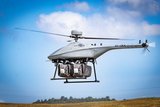
The Malloy Aeronautics T-150 cargo-carrying UAV was displayed at the Farnborough Airshow with BAE Systems’ Advanced Precision Kill Weapon System weapon. (Photo: author)
BAE Systems’ Malloy Aeronautics is seeking to expand the international customer base for its T-150 heavy-lift UAV, with NATO users beginning to adopt the platform and Australia identified as a key prospective market.


Speaking to Defence Insight at the Farnborough International Airshow (FIA) 2026, Malloy Aeronautics CEO Neil Appleton confirmed that the T-150 was awaiting inclusion on the NATO Support and Procurement Agency (NSPA) register.
The cargo-carrying uncrewed aerial vehicle (UAV) is already in operation with some NATO users including the UK Royal Navy (RN), Royal Marines and US Marine Corps, and Appleton added that “one or two” other NATO customers are in “early adoption of the capability”.
Outside of NATO, Malloy is also looking to establish a foothold in Australia. “We are trying to get into the Australian market” to complete the “AUKUS hat-trick”, Appleton said.
Our news & analysis is now part of Defence Insight®
A Basic-level or higher Defence Insight subscription is now required to view this content.


More from Farnborough International Airshow 2026 | View all news
-
![A400M trial demonstrates airborne deployment of uncrewed surface vessel]()
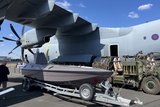
A400M trial demonstrates airborne deployment of uncrewed surface vessel
Kraken Technology Group’s A400M airdrop of a K3 Scout uncrewed surface vessel points to a new way for navies to insert USVs into contested waters, bypassing ports and motherships.
-
![July drone digest: Sovereign production takes centre stage at Farnborough]()
July drone digest: Sovereign production takes centre stage at Farnborough
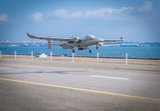
Farnborough International Airshow (FIA) 2026 revealed the growing scale of the UK’s uncrewed ambitions, with companies showcasing new CCA, autonomous wingmen and surveillance drones, while sovereign production emerged as a key factor for multiple programmes.
-
![July air forces review: Farnborough steals the headlines as programmes develop]()
July air forces review: Farnborough steals the headlines as programmes develop
The biannual Farnborough International Airshow 2026 was the backdrop in July for scores of deals, partnerships and announcements, including developments in the multinational next-generation Global Combat Air Programme and the UK’s $486 million trainer aircraft requirement.
-
![FIA 2026: Bell highlights MOSA-driven growth path for MV-75 Cheyenne]()
FIA 2026: Bell highlights MOSA-driven growth path for MV-75 Cheyenne
Bell Flight’s modular open-systems approach for the US Army’s MV-75 Cheyenne could open doors for international allies and suppliers once locked out by closed rotorcraft architectures.
-
![Maximise survivability with advanced electronic warfare (video)]()
Maximise survivability with advanced electronic warfare (video)
BAE Systems’ all-digital EW delivers 360-degree threat awareness in contested environments, boosts survivability, and cuts lifecycle costs.
-
![British Army’s Project Corvus selection highlights new era of drone sovereignty]()
British Army’s Project Corvus selection highlights new era of drone sovereignty
The UK’s choice of the Tekever AR5 for Project Corvus reflects a wider shift in military drone procurement towards solutions that centre on sovereignty and domestic production, moving away from overseas reliance.