FIA 2026: Boeing pitches Ghost Bat as mature answer to growing CCA demand
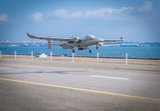
Boeing’s MQ-28 Ghost Bat is displayed alongside MBDA’s Meteor beyond-visual-range air-to-air missile at Farnborough International Airshow 2026. (Photo: author)
Boeing said demand for collaborative combat aircraft could outstrip what any single supplier can provide, as BAE Systems and Anduril unveiled new platforms at Farnborough International Airshow 2026.


Collaborative combat aircraft (CCA) emerged as one of the dominant themes of Farnborough International Airshow 2026, with Boeing arguing that demand for the uncrewed systems could outstrip what any single manufacturer is able to supply, as BAE Systems and Anduril Industries moved to strengthen their own positions in the field.
Tim Flood, international business development and strategy leader for Boeing Defense, Space & Security, and Glen Ferguson, director of the MQ-28 Ghost Bat programme, addressed journalists at a Boeing media briefing on 21 July. Flood identified urgency, capability and sovereignty as the three attributes now driving CCA procurement, pointing
Our news & analysis is now part of Defence Insight®
A Basic-level or higher Defence Insight subscription is now required to view this content.

More from Farnborough International Airshow 2026 | View all news
-
![A400M trial demonstrates airborne deployment of uncrewed surface vessel]()
A400M trial demonstrates airborne deployment of uncrewed surface vessel
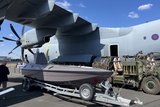
Kraken Technology Group’s A400M airdrop of a K3 Scout uncrewed surface vessel points to a new way for navies to insert USVs into contested waters, bypassing ports and motherships.
-
![July drone digest: Sovereign production takes centre stage at Farnborough]()
July drone digest: Sovereign production takes centre stage at Farnborough
Farnborough International Airshow (FIA) 2026 revealed the growing scale of the UK’s uncrewed ambitions, with companies showcasing new CCA, autonomous wingmen and surveillance drones, while sovereign production emerged as a key factor for multiple programmes.
-
![July air forces review: Farnborough steals the headlines as programmes develop]()
July air forces review: Farnborough steals the headlines as programmes develop
The biannual Farnborough International Airshow 2026 was the backdrop in July for scores of deals, partnerships and announcements, including developments in the multinational next-generation Global Combat Air Programme and the UK’s $486 million trainer aircraft requirement.
-
![FIA 2026: Bell highlights MOSA-driven growth path for MV-75 Cheyenne]()
FIA 2026: Bell highlights MOSA-driven growth path for MV-75 Cheyenne
Bell Flight’s modular open-systems approach for the US Army’s MV-75 Cheyenne could open doors for international allies and suppliers once locked out by closed rotorcraft architectures.
-
![Maximise survivability with advanced electronic warfare (video)]()
Maximise survivability with advanced electronic warfare (video)
BAE Systems’ all-digital EW delivers 360-degree threat awareness in contested environments, boosts survivability, and cuts lifecycle costs.
-
![British Army’s Project Corvus selection highlights new era of drone sovereignty]()
British Army’s Project Corvus selection highlights new era of drone sovereignty
The UK’s choice of the Tekever AR5 for Project Corvus reflects a wider shift in military drone procurement towards solutions that centre on sovereignty and domestic production, moving away from overseas reliance.