China’s modernisation could “gradually erode” US advantage, says IISS
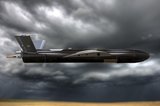
China's J-20 is in service with at least eight frontline units. (Photo: Wikimedia Commons/N509FZ)
China’s growing capabilities, such as newly unveiled combat aircraft designs and ongoing J-20 aircraft production, were noted as examples of the country’s rapid modernisation efforts and military reforms.


China’s armed forces far “outmatch” its regional rivals, with a modernisation that remains “striking in its pace and scope”, defence and security think tank, the International Institute for Strategic Studies (IISS), has said.
Presenting its latest Military Balance edition, the IISS noted that the China’s path towards modernisation of its armed forces could “gradually erode” the US’s advantage in defence.
According to the IISS, China has seen an uplift in military spending by 7%, which sees its budget of around US$235 billion making up 44% of total spending in Asia – a figure above Europe’s total, the largest total
Our news & analysis is now part of Defence Insight®
A Basic-level or higher Defence Insight subscription is now required to view this content.

More from Air Warfare
-
![USMC advances MV-22B Osprey safety and reliability upgrades]()
USMC advances MV-22B Osprey safety and reliability upgrades
The US Marine Corps is testing a redesigned input quill assembly and plans to transition its MV-22B fleet to improved gearboxes by January 2033 as it prepares to operate the tiltrotor through 2055.
-
![Ageing RQ-11 Raven fleets create a global replacement opportunity]()
Ageing RQ-11 Raven fleets create a global replacement opportunity
The RQ-11 Raven is being retired from service across most of its more than 30 operators. Defence Insight estimates that these Raven retirements open up a replacement market worth at least $576 million, but suppliers will have to act quickly and strike a balance between cost and capability to succeed.
-
![Shield the warfighter, win the fight (video)]()
Shield the warfighter, win the fight (video)
BAE Systems’ Intrepid Shield™ approach delivers full-spectrum electromagnetic protection to detect, exploit, and counter advanced threats.
-
![August drone digest: AEVEX solidifies large US loitering munition market share as procurement models shift]()
August drone digest: AEVEX solidifies large US loitering munition market share as procurement models shift
AEVEX has strengthened its position in the US loitering munition market with another contract award, solidifying its position as the second-largest supplier of the capability in the US. Elsewhere in August, new and emerging programmes in Sweden and Germany point to a broader shift towards larger, rolling framework agreements for loitering munitions across Europe.