Canadian observer status reinforces GCAP’s strength in emerging ‘middle power’ bloc
GCAP brings together the UK, Italy and Japan to develop a sixth-generation stealth fighter. (Image: BAE Systems)
The significant setback seen by FCAS earlier this year has secured GCAP’s position as Europe’s future sixth-generation fighter, while Canada’s potential observer status could push the programme into the next stage.


Following sustained interest in joining the Global Combat Air Programme (GCAP), Canada has reportedly finalised an agreement to gain observer status in the initiative. Media outlet Politico reported on 15 July 2026 that an anonymous source close to the programme indicated a deal had been reached for Canada’s participation as an observer.
Canada’s interest in joining GCAP was likely catalysed by ongoing trade tensions with the US, which have been exacerbated by tariff threats from US President Donald Trump. Canadian Prime Minister Mark Carney’s administration has commenced a clear strategy aimed at diversifying defence capabilities away from the US. This approach has included the selection of Saab’s GlobalEye aircraft as the nation’s new early warning platform and a review of the its F-35 order.
The country’s alleged entrance into the GCAP effort underscores the central theme of Carney’s 2026 Davos speech that proposed middle powers across the globe form an alternative superpower bloc to counter US and Chinese bi-polarity. This strategy could see further new participants into the GCAP programme and will likely continue to translate into Canada’s procurement patterns.
Related Articles
First GCAP contract marks milestone for Edgewing, while UK waits on further funding
A new shape in the sky? Mapping out the F-47’s configuration
A unique multinational initiative
Formally announced in December 2022, GCAP aims to address the need for a next-generation fighter aircraft and air sovereignty. At its inception, the programme brought together the UK and Italy’s Tempest programme with Japan’s F-2 replacement project.
The programme is led by industry representatives from each nation, including BAE Systems, Mitsubishi Heavy Industries and Leonardo. Various other industry leaders are critical contributors to the programme including Rolls-Royce, MBDA UK and Italia respectively, and Japan’s IHI Corporation.
Between 2023 and 2024, the GCAP Global International Government Organisation convention was signed and enacted, giving rise to a legal framework that allows for international cooperation on the programme. Subsequently, a new entity in which each nation has an equal stake was established under the name Edgewing. The company was formally announced and launched in June 2025. Edgewing is currently responsible for the design, production and delivery of the GCAP aircraft.
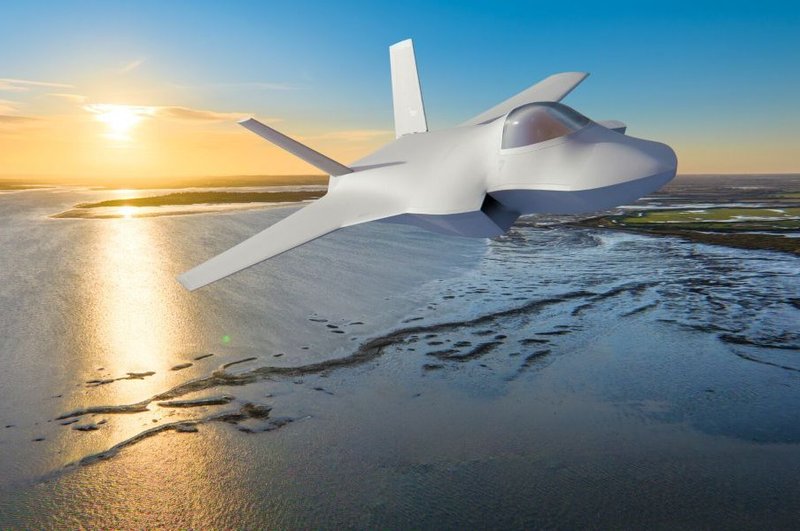
GCAP is a unique opportunity for international middle powers to solidify their air sovereignty, strengthen their respective defence industrial bases and, critically, take advantage of the opportunity to stay competitive in an increasingly technologically advanced defence market. The UK 2026 Defence Investment Plan, published at the end of June 2026, has allotted approximately £4.6 billion (US$6.19 billion) to the programme through Edgewing to bring the project into the next phase of testing and design set to run through 2027.
To secure the future of Europe, it is critical that GCAP continues to receive consistent funding and remain on track for a 2035 in-service date.
Competition and potential partners
The GCAP programme is one of multiple global sixth-generation programmes which has seen close competition, namely in the form of the Future Combat Air System (FCAS) programme and the US’s F-47. Critically, however, the FCAS effort between France, Germany and Spain collapsed earlier in 2026, meaning Europe’s last hope for a sixth-generation aircraft now lies with GCAP.
The GCAP programme has received significant attention from other nations regarding potentially joining the programme. The two most outspoken potential partners include Canada and Saudi Arabia.
Saudi Arabia’s interest in joining the programme is driven by the desire to develop domestic defence manufacturing as part of Crown Prince Mohammed bin Salman’s Vision 30 strategy. While Saudi’s entrance to the programme would provide access to a large reserve of capital, the nation’s ties to Russia and China have given rise to security concerns from other participants.
Shephard’s Farnborough International Airshow coverage is sponsored by MBDA

Related Programmes in Defence Insight
Global Combat Air Programme [UK]
Global Combat Air Programme [Italy]
Related Equipment in Defence Insight

More from Farnborough International Airshow 2026 | View all news
-
![How the UK’s New Medium Helicopter award strengthens AW149’s European prospects]()
How the UK’s New Medium Helicopter award strengthens AW149’s European prospects
The UK advanced its long-delayed New Medium Helicopter programme in March with a £1 billion order for 23 Leonardo AW149s. While the deal could provide a foundation for further UK and European export orders, funding pressures and previous delays continue to cloud the programme’s future.
-
![“Timelines are measured in seconds”: tackling the UAS threat with dispersed defences]()
“Timelines are measured in seconds”: tackling the UAS threat with dispersed defences
Small uncrewed aerial systems (UAS) have transformed the battlespace, posing a complex threat across all domains. Militaries now need counter-UAS (CUAS) capabilities that defeat the danger while meeting demands around readiness, manoeuvrability and adaptability, according to Mike Spina, Director, Global Sales and Business Development for Targeting and Sensor Systems (TSS) at L3Harris Technologies.
-
![New UK armed forces minister frames High North defence as vital to “homeland security”]()
New UK armed forces minister frames High North defence as vital to “homeland security”
The UK’s Minister for the Armed Forces Louise Sandher-Jones made her first appearance in the role before the House of Commons Defence Committee this week to highlight efforts to improve capability in the High North.
-
![“No single technology is enough”: why an integrated approach to uncrewed warfare is essential]()
“No single technology is enough”: why an integrated approach to uncrewed warfare is essential
In Conversation… Ahmet Akyol, CEO of ASELSAN, talks to Shephard’s Gerrard Cowan about how the rapid evolution of uncrewed aerial systems (UAS) is transforming the battlespace, with militaries focused on both deploying these platforms to maximum effect and developing the defensive systems needed to counter them.
-
![UK air focus: Drone spending trails European frontline states despite $10.46 billion valuation]()
UK air focus: Drone spending trails European frontline states despite $10.46 billion valuation
Despite the UK having the third-largest military UAV market in Europe, the country appears to be underinvesting in the capability relative to the size of its economy, particularly when compared with Baltic and eastern European states.
-
![Proteus: Forging the future of autonomous rotorcraft]()
Proteus: Forging the future of autonomous rotorcraft
As the home of British helicopters, Leonardo has worked with the UK Ministry of Defence for over a decade to advance technologies underpinning uncrewed rotorcraft. Today, in partnership with UK Defence Innovation and the Royal Navy, Leonardo is spearheading the next step in that journey: from remotely piloted technologies to fully autonomous systems.