Airbus awaits USMC decision on Logistics Connector programme
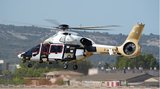
A concept image of what the MQ-72C Logistics Connector could look like. (Image: Airbus)
Airbus has been advancing development of its uncrewed MQ-72C Logistics Connector for the US Marine Corps, with a decision on the programme expected in early 2026.


Airbus has said it expects the US Marines Corps (USMC) to make a decision “in early 2026” regarding a competition for an uncrewed aerial system designed for expeditionary transport missions in challenging areas. Airbus is under contract with the USMC to develop a concept, called the MQ-72C Logistics Connector, which is currently in the design phase with the project moving forward.
At a recent event in Washington, DC, Jaysen Yochim, senior director at the US Marine Corps Aerial Logistics Connector Program at Airbus, confirmed to Shephard that the company was “beginning to do some prototyping” of the platform.
While the
Our news & analysis is now part of Defence Insight®
A Basic-level or higher Defence Insight subscription is now required to view this content.



More from Air Warfare
-
![Upgrades and fresh orders reinforce demand for Dassault’s Rafale fighter jet (updated 2026)]()
Upgrades and fresh orders reinforce demand for Dassault’s Rafale fighter jet (updated 2026)
The French-made aircraft is lining up potentially huge orders in Asia, with the latest F5 platform designed to keep the jet relevant in the modern battlespace until the 2040s.
-
![Eurosatory 2026: Helicopters and CUAS set to dominate as Europe advances rearmament efforts]()
Eurosatory 2026: Helicopters and CUAS set to dominate as Europe advances rearmament efforts
The biennial show in Paris will focus heavily on autonomous technology, counter-drone solutions and helicopters, as countries ramp up defence budgets and focus on modernising defence capabilities.
-
![North American appetite for European AEW&C aircraft bolstered as Canada picks GlobalEye]()
North American appetite for European AEW&C aircraft bolstered as Canada picks GlobalEye
Canada’s selection of Saab’s GlobalEye to fulfil its airborne early warning requirements draws the country closer to European industry over American-made platforms, snubbing Boeing and L3Harris.
-
![US Air Force to fast-track capability development for GPS-denied operations]()
US Air Force to fast-track capability development for GPS-denied operations
Over the next 18 months, the air force's research facility intends to accelerate the progress of resilient, autonomous solutions to support aircraft and helicopter deployments in DDIL overland and over-the-water scenarios.