Advances in AI sensing technology reshape how UAV operators interpret battlefield data
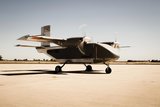
Arkeus’s Warden technology on the Integrator UAS platform. (Photo: Arkeus)
AI-powered sensing technologies are advancing battlefield intelligence capabilities, with companies including Sightline Intelligence and Arkeus developing smaller, more sophisticated systems to help military UAV operators process data and identify threats.


As a former US Army officer who led a mechanised infantry platoon in Kuwait, Jonathan Atwood has first-hand experience of how overloaded operators can become with the data and reports they are fed on the battlefield. “It gets cluttered and confusing pretty quickly when you’re on the radio, hearing multiple people provide reports,” said Atwood.
“It’s even worse now with all these systems that are providing all this data. We’ve got to be able to simplify that for the operator, for the warfighter, and reduce the cognitive burden,” he said.
Atwood is the CEO of a company that aims to
Our news & analysis is now part of Defence Insight®
A Basic-level or higher Defence Insight subscription is now required to view this content.



More from Air Warfare
-
![Leonardo details Proteus’s path to autonomous anti-submarine missions for the Royal Navy]()
Leonardo details Proteus’s path to autonomous anti-submarine missions for the Royal Navy
Leonardo’s integration of Shield AI’s Hivemind software could enable its Proteus uncrewed helicopter to conduct independent anti-submarine warfare missions, supporting the Royal Navy’s plans for a future hybrid air wing.
-
![Oshkosh and Grid Aero tie-up tests new model for scaling military UAS production]()
Oshkosh and Grid Aero tie-up tests new model for scaling military UAS production
By combining established manufacturing capacity with startup aircraft design, the partnership could offer an alternative approach to scaling military uncrewed aircraft production.
-
![European funding and NATO interoperability could shape Polish helicopter plans]()
European funding and NATO interoperability could shape Polish helicopter plans
Poland is seeking to update its transport helicopters as part of a wider military aviation modernisation programme, with EU funding requirements and NATO interoperability key considerations.